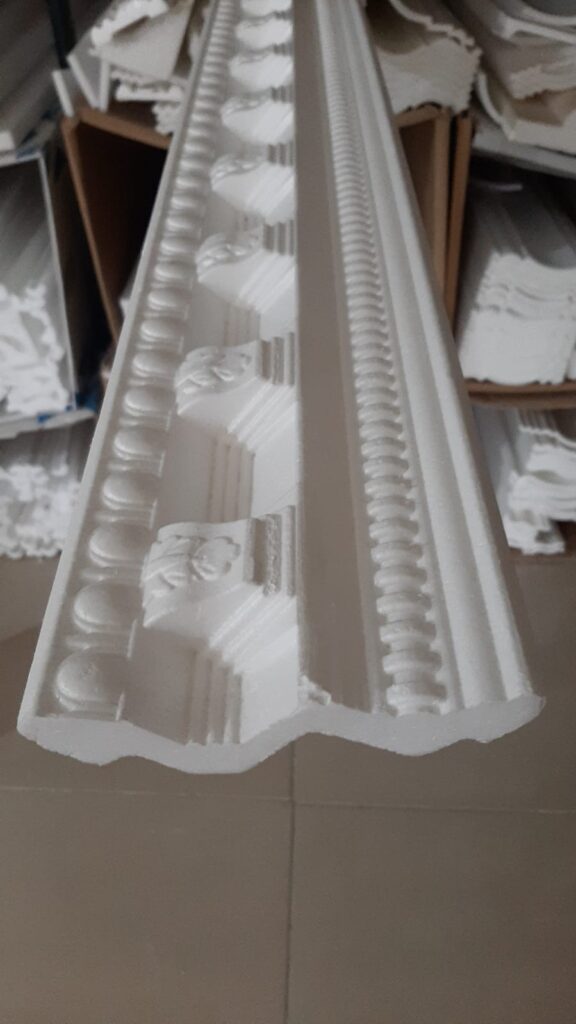

Selecting the right cornice involves more than just picking a design you love. Practical factors like ceiling height, color, and size significantly impact the final look and feel of your space. This guide breaks down how to assess these elements to make the perfect choice for your home.
Why Ceiling Height, Color, and Size Matter
Cornices are architectural elements that frame your ceiling and enhance your interiors. Misjudging these factors can lead to:
- A disproportionate or unbalanced appearance.
- A mismatch with your room’s scale and lighting.
- Reduced functionality or visual appeal.
By evaluating these key aspects, you can ensure your cornice complements your space seamlessly.
Step 1: Consider Ceiling Height
Ceiling height plays a crucial role in determining the size and style of your cornice.
Low Ceilings
- Opt for slim, minimalist designs to avoid making the room feel cramped.
- Choose cornices with clean lines and subtle patterns.
High Ceilings
- Go for wider, more elaborate cornices to fill the vertical space.
- Consider ornate or detailed designs to create a dramatic effect.
Vaulted or Sloped Ceilings
- Use adaptable designs like flexible polyurethane for a tailored fit.
Step 2: Evaluate Room and Ceiling Colors
The color of your room and ceiling affects how the cornice blends with the overall design.
Matching Colors
- For a cohesive look, use a cornice color that matches your walls or ceiling.
- White or neutral tones are classic and versatile.
Contrasting Colors
- Add visual interest by choosing a cornice color that contrasts subtly with the ceiling.
- This works well in modern or eclectic interiors.
Painted Cornices
- Add a pop of color or a unique pattern to the cornice itself for a bold statement.
Step 3: Determine Cornice Size Based on Room Dimensions
The size of the cornice should be proportionate to your room’s dimensions:
- Small Rooms: Narrow cornices help maintain an open and airy feel.
- Large Rooms: Wider cornices can anchor the space and provide a sense of structure.
- Open-Plan Areas: Use consistent cornice sizing throughout to create a unified design.
Step 4: Account for Room Functionality
Different rooms have different needs. Consider these factors:
- Living Rooms: Choose ornate or decorative cornices to act as focal points.
- Bedrooms: Select soft and understated designs for a calm atmosphere.
- Bathrooms and Kitchens: Use moisture-resistant materials and simple designs.
Step 5: Visualize Before Purchasing
Many suppliers offer tools or samples to help you visualize the cornice in your space. Use these to test:
- How the design interacts with your room’s dimensions and lighting.
- Whether the color complements or contrasts appropriately.
Call to Action
Looking for the perfect cornice to suit your ceiling height, color, and size? Explore our wide range of designs tailored for every room and style. Contact our experts today to get personalized recommendations and ensure a flawless finish!