Polystyrene is one of the most commonly used plastics in the world, renowned for its versatility and wide range of applications. From food containers to insulation and decorative molding, polystyrene is molded into various shapes and forms to meet different needs. The process of molding polystyrene is a carefully controlled operation that ensures the final product has the right properties for its intended use. In this blog, we will explore the detailed manufacturing process of molded polystyrene, from raw material preparation to the final molded product.
Understanding Polystyrene: The Basics
Polystyrene is a synthetic polymer made from the polymerization of styrene monomers, a liquid hydrocarbon derived from petroleum. It can be used in both rigid and foam forms. When it comes to molding, the two main types of polystyrene are:
- Expanded Polystyrene (EPS): A lightweight foam made by expanding polystyrene beads.
- Extruded Polystyrene (XPS): A denser, solid form of polystyrene produced through an extrusion process.
Both types are extensively used in molding applications, including packaging, insulation, and architectural trims. The molding process varies slightly depending on whether the polystyrene is in expanded or extruded form, but the general principles remain the same.
Polystyrene Moulding Process
The molding of polystyrene can be carried out through several methods, with the most common being injection molding, extrusion molding, and expansion molding. Below is an overview of the key steps involved in each method:
1. Injection Molding
Injection molding is a widely used process for creating detailed, high-precision polystyrene products, such as containers, packaging materials, and parts for automotive or electronics. The process involves the following steps:
- Material Preparation: Polystyrene resin (in the form of pellets) is first dried to remove moisture, as excess moisture can cause defects during molding.
- Melting: The polystyrene resin is then fed into an injection molding machine, where it is heated until it melts into a viscous, fluid state.
- Injection: The melted polystyrene is injected under high pressure into a metal mold. The mold cavity is designed to form the desired shape of the product.
- Cooling and Solidifying: After the polystyrene is injected, the mold is cooled, allowing the material to harden into the final shape.
- Ejection: Once cooled, the molded part is ejected from the mold, and any excess material (such as runners and sprues) is trimmed off.
Applications: Injection-molded polystyrene products are used in items like packaging, containers, toys, and medical devices. The process allows for a high degree of precision and the ability to create complex shapes.
2. Extrusion Molding
Extrusion molding is commonly used for producing continuous products with uniform cross-sections, such as insulation boards, profiles, and sheets of polystyrene. The process involves:
- Polymer Feeding: Polystyrene beads or pellets are fed into an extruder, a machine that consists of a heated barrel with a screw mechanism.
- Melting and Extrusion: As the beads move through the heated barrel, they melt and are forced through a die that shapes them into the desired profile, such as sheets, pipes, or profiles.
- Cooling: The extruded polystyrene product is then cooled, either by air or water, to solidify it and maintain its shape.
- Cutting: Once cooled, the extruded polystyrene is cut into the required length or shape, ready for use or further processing.
Applications: Extruded polystyrene is commonly used for insulation materials, such as foam boards, and structural components like trim and moldings for interior and exterior applications.
3. Expansion Molding (EPS)
Expansion molding is specifically used for producing Expanded Polystyrene (EPS), a lightweight foam material used in a variety of applications, including packaging, insulation, and decorative moldings. The process for EPS involves:
- Bead Expansion: Small polystyrene beads, which contain a blowing agent (usually pentane), are first expanded using steam. When exposed to heat, the blowing agent causes the beads to expand and increase in size.
- Molding: The expanded beads are placed into a mold, where they are heated further with steam. This process causes the beads to fuse together, filling the mold cavity and creating a solid, molded product.
- Cooling and Solidifying: After the beads have fused together, the product is cooled and solidified to create the final shape.
- Ejection: Once cooled, the molded EPS product is ejected from the mold. The product is then allowed to cure further before use.
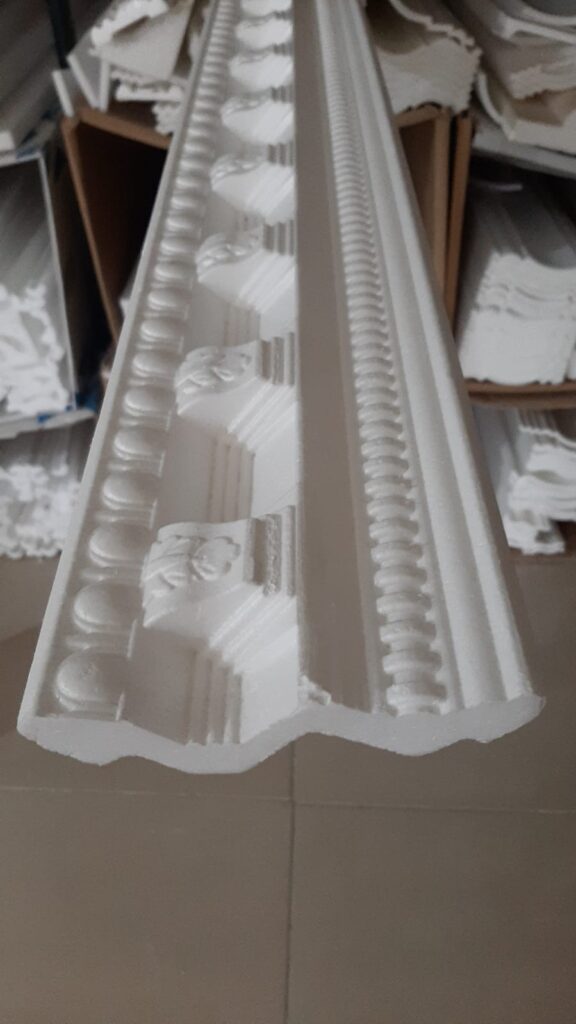
Applications: EPS is commonly used for packaging materials, insulation boards, decorative architectural elements (such as crown moldings and trims), and disposable food containers. The material’s lightweight and insulating properties make it ideal for these uses.
Key Factors Affecting Polystyrene Moulding
The success of the polystyrene molding process depends on several factors:
- Material Quality: The quality of the raw polystyrene resin plays a significant role in the final product. Impurities or moisture can affect the flow of material and lead to defects.
- Mold Design: The design of the mold is critical to ensuring that the molded part has the desired shape, finish, and dimensional accuracy. The mold must be precisely manufactured to account for shrinkage, temperature changes, and other variables.
- Temperature and Pressure: Proper control of temperature and pressure during the molding process is essential for achieving the desired material properties. Polystyrene has specific temperature requirements to ensure smooth flow and proper cooling.
- Cooling Time: The cooling process affects the final product’s properties, such as its rigidity and durability. If cooling is too fast or slow, the product may develop cracks or warping.
Advantages of Polystyrene Moulding
Polystyrene molding offers several benefits, making it an ideal choice for many industries:
- Cost-Effective: Polystyrene is relatively inexpensive compared to other plastics, making it a cost-effective option for large-scale manufacturing.
- Versatility: The molding process can be adapted to create products of various shapes, sizes, and complexities, from simple sheets to intricate decorative elements.
- Lightweight: Polystyrene is a lightweight material, particularly in its expanded form (EPS), which makes it ideal for applications like packaging and insulation.
- Durability: Polystyrene products are durable, with good resistance to impact, moisture, and chemicals (depending on the type of polystyrene used).
- Insulation: Expanded polystyrene (EPS) offers excellent thermal insulation, making it a popular choice for building materials and packaging.
Conclusion
Polystyrene is a versatile and widely used material that can be molded into a variety of shapes and forms through different processes, including injection molding, extrusion molding, and expansion molding. Each process has its own advantages and applications, with the choice of method depending on factors such as product type, cost, and performance requirements. Whether producing lightweight packaging materials or detailed decorative elements, the molding process allows manufacturers to create high-quality polystyrene products that meet the needs of diverse industries. By understanding the manufacturing process and selecting the right molding technique, you can achieve durable, cost-effective, and functional polystyrene products for various applications.