When designing or renovating a home, you may come across terms like moulding and crown moulding, but what exactly sets them apart? While both serve decorative and functional purposes, they are not interchangeable. This article explores the key differences, uses, and benefits of moulding and crown moulding, helping you make the best choice for your space.
1. Understanding Moulding
Moulding (or molding) is a general term for any type of trim or decorative edging that enhances the look of walls, ceilings, doors, windows, or furniture. It comes in various styles and materials and is used to create architectural character in both traditional and modern interiors.
Common Types of Moulding
🔹 Baseboard Moulding: Installed at the bottom of walls to cover gaps between the wall and floor.
🔹 Chair Rail Moulding: Runs horizontally across the wall to protect it from damage (commonly found in dining rooms).
🔹 Picture Rail Moulding: A thin strip used to hang artwork without drilling holes in the wall.
🔹 Panel Moulding: Creates decorative wall panels for an elegant, classic look.
🔹 Casing Moulding: Frames windows and doors for a finished appearance.
Purpose of Moulding
✔ Covers gaps and imperfections between walls, floors, and ceilings
✔ Adds decorative detail and enhances architectural style
✔ Provides protection to walls from damage
2. What Is Crown Moulding?
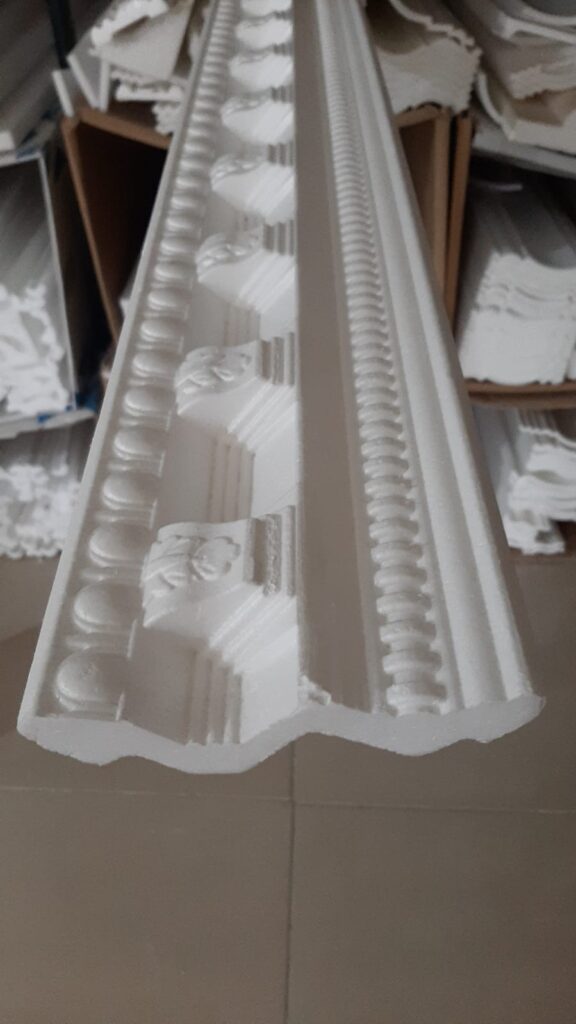
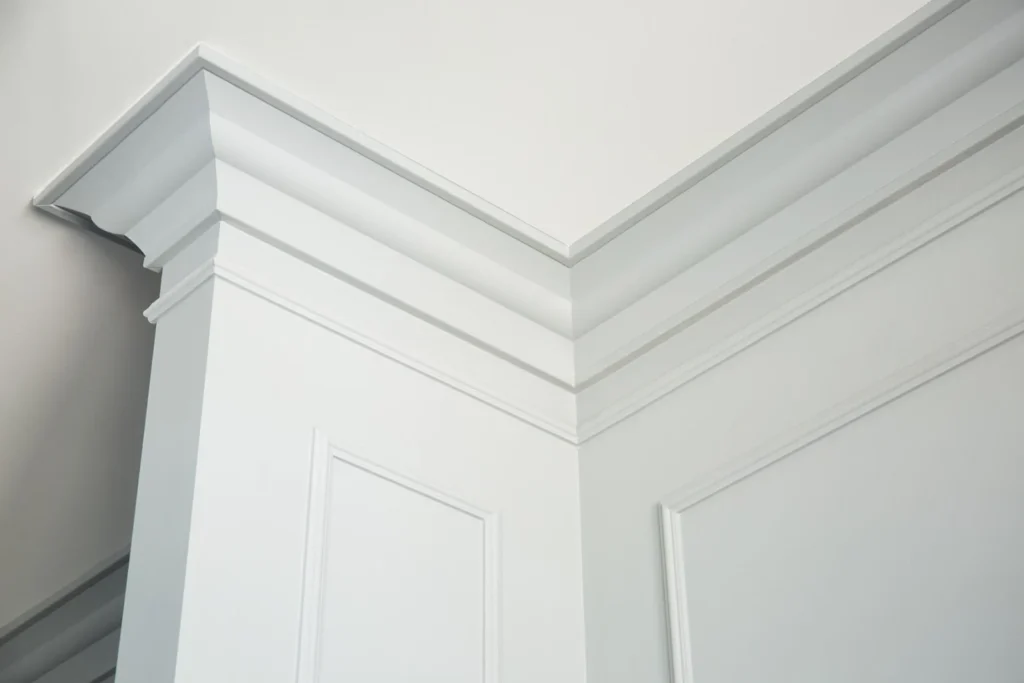
Crown moulding is a specific type of moulding that is installed where the walls meet the ceiling. It is often more decorative than other types of moulding and is used to add elegance, depth, and sophistication to a room.
Key Features of Crown Moulding
🛠️ Placement: Always installed at the junction of the wall and ceiling
📏 Shape: Angled or curved to create a smooth transition
🎨 Style: Available in simple designs or intricate patterns
Popular Crown Moulding Styles
🔸 Traditional Crown Moulding: Ornate and decorative, perfect for classic homes
🔸 Modern Crown Moulding: Sleek and simple, ideal for contemporary interiors
🔸 Layered Crown Moulding: Multiple layers of trim for a luxurious effect
🔸 LED-Integrated Crown Moulding: Designed to hold LED lights for ambient lighting
3. Key Differences Between Moulding and Crown Moulding
| Feature | Moulding | Crown Moulding |
|---|---|---|
| Definition | A general term for any decorative trim | A specific type of moulding used at the ceiling |
| Placement | Walls, doors, windows, and floors | Where the wall meets the ceiling |
| Function | Decorative and protective | Primarily decorative |
| Styles | Various styles like baseboard, casing, and chair rail | Ornate, modern, or LED-lit |
| Materials | Wood, MDF, plaster, polyurethane, styrofoam | Wood, plaster, polyurethane, foam |
| Design Complexity | Can be simple or detailed | Typically more decorative |
4. Which One Should You Choose?
✔ If you want a full decorative trim package – Use a combination of moulding types, including crown moulding.
✔ If you only need ceiling detail – Crown moulding is the best choice.
✔ If your goal is wall protection – Chair rail or baseboard moulding is more practical.
✔ If you want a modern, minimalist look – Opt for simple moulding styles with clean lines.
Conclusion
While moulding is a broad category that includes many types of trim, crown moulding is a specialized type designed specifically for ceiling transitions. Understanding these differences helps you make the right choice for your home’s style and functionality.